Help Center Utility
Understanding Different Grid Connection Types
Published on 10 Dec 2021
This guide explores Solargraf's supported grid connection types: Net Metering, Net Feed-in Tariffs, Net Metering 3.0 (Net Billing), Smart Solar Billing, and Gross Feed-in Tariffs. Details of each scheme follow.
Net Metering
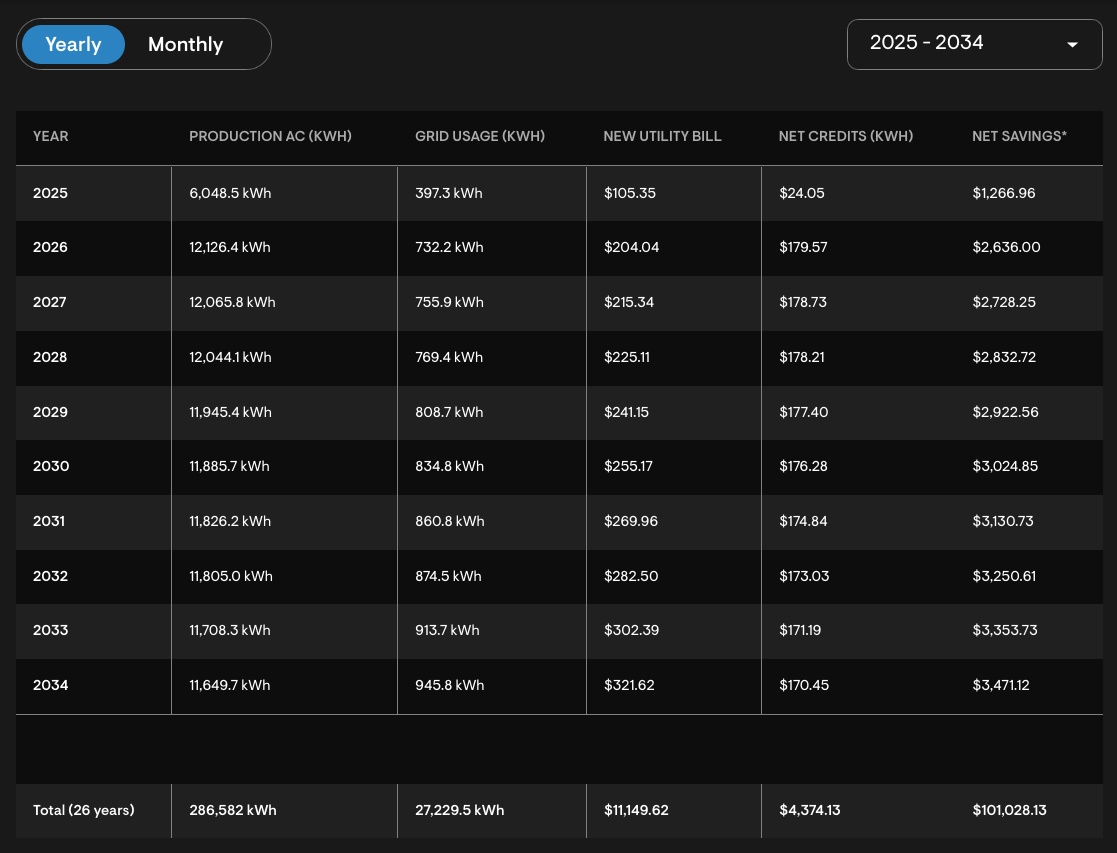
Under the net metering scheme, the client is able to sell excess energy generated to the utility in exchange for a kWh credit which they can use to offset their consumption during the same month or in the following one. The client requires one meter, which turns in both directions, to keep track of energy exported to and imported from the utility grid.
On the Solargraf proposal, the detailed savings table in the Usage Breakdown section will reflect:
Production (AC): The total amount of AC kWh produced by the solar system during each month, accounting for Degradation of the solar system. If a battery is added, Production will include the kWh used from the battery to meet the client's energy demand.
Grid Usage: This is the total amount of energy imported from the grid during the month. This field also lists the total energy consumption during the month. If a battery is added, this field will include the Transferred Energy which refers to the energy used (from the grid or excess from the solar system) to charge the battery.
New utility Bill: This displays the total amount of energy imported from the grid, as well as the minimum fee and fixed charges for the selected tariff.
Net Credits: This displays the total amount of excess energy exported to the grid, as well as the utility buyback rate and the total value of the accumulated credits.
Net Savings: This displays the monthly savings amount which is calculated as the Old Bill minus the sum of the New Utility Bill and, if a loan option is selected, the New Solar Bill. This will also include the savings generated by selling excess energy generated to the utility at the specified buyback rate.
Net Feed-in Tariff (FiT)
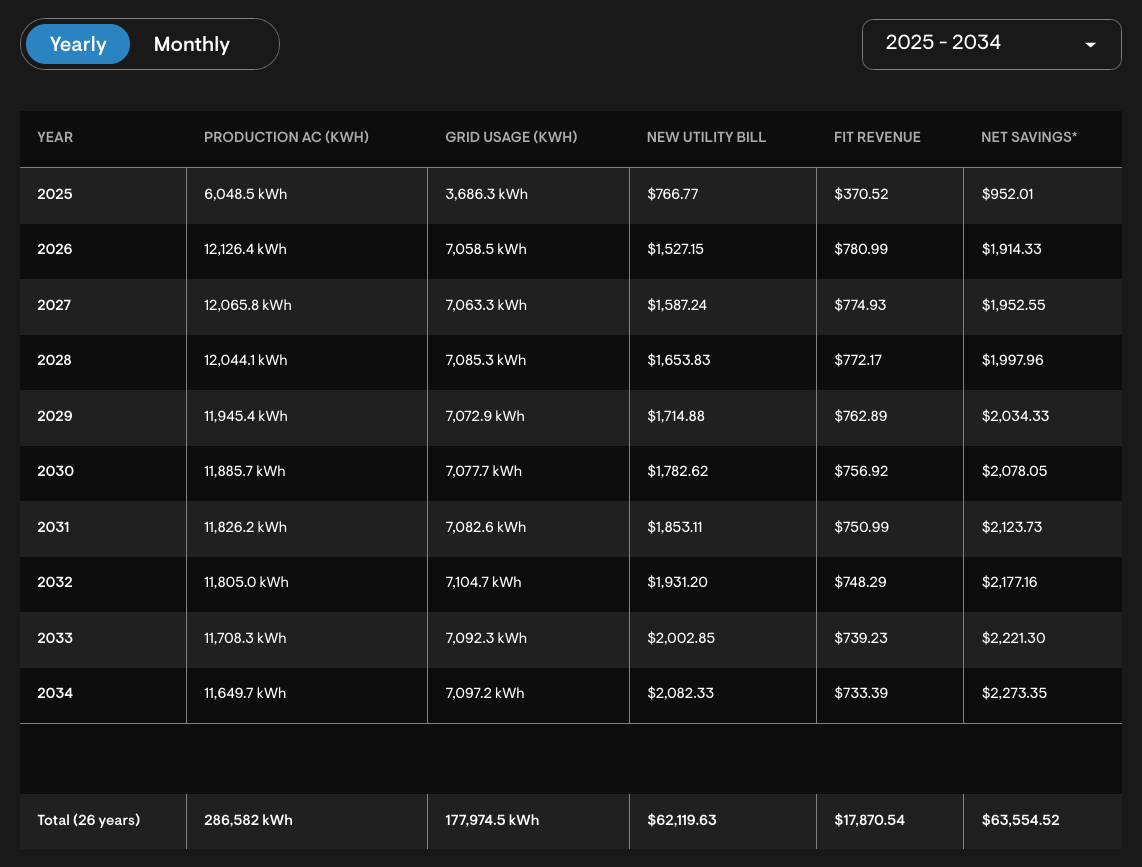
Under the Net Feed-in Tariff (FiT) scheme, the client meets their energy demand first by using solar energy available at the time of their demand, and if that's not enough, then purchasing electricity from the grid. If the client requires energy at a time where the solar system is not producing electricity, they will need to purchase all their required energy from the grid. Unlike under the net metering scheme, no credits are generated for energy exported to the grid. However, the client will sell the excess energy to the utility, at the time it is produced, at a specified buyback rate.
On the Solargraf proposal, the detailed savings table will similarly reflect the Production (AC), Grid Usage and Utility Bill columns as under the Net Metering Scheme. It will also show:
- FiT Revenue: This displays the total amount of excess energy exported to the grid, by the end of the month, as well as the utility buyback rate and the total value of the excess energy sold.
- Solar Savings: This displays the monthly savings amount which is calculated as the Old Bill minus the sum of the New Utility Bill and, if a loan option is selected, the New Solar Bill. This will also include the FiT Revenue generated by selling excess energy to the utility.
Gross Feed-in Tariff (FiT)
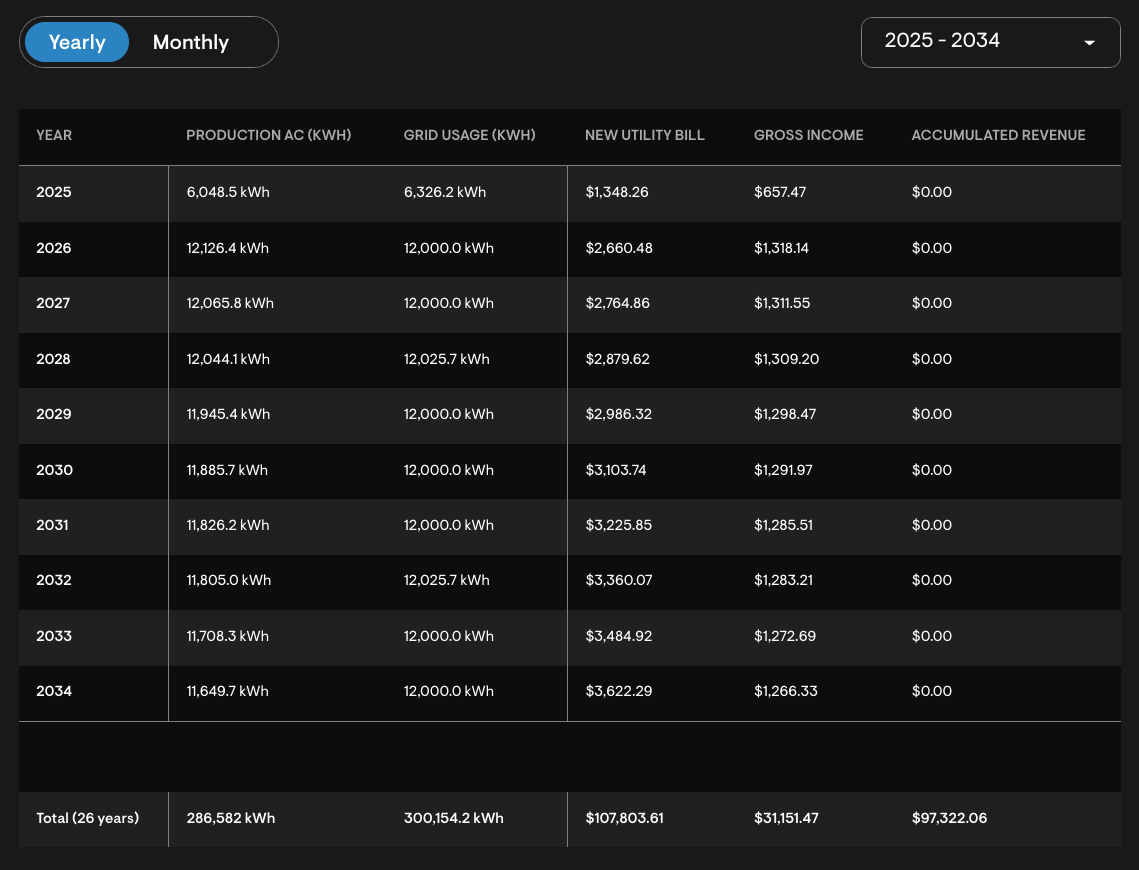
Under this scheme, the client sells all electricity produced and purchases all electricity consumed. This requires that the client use two separate meters to keep track of energy exported to and imported from the utility grid.
On the Solargraf proposal, in addition to Production (AC) and Solar Bill, the detailed savings table in the Usage Breakdown section will reflect:
- Gross Income: This is the income generated by selling all produced electricity to the utility at the specified utility sell rate.
- Accumulated Revenue: This accounts for the Initial Net Cost of the system, the sum of all Gross Income generated since month 1, and if a loan option is selected, the Cumulative Solar Bill. This field will only display a non-zero value once the accumulated revenue offsets the Initial Net Cost and if applicable, the Cumulative Solar Bill.
Net Metering 3.0 (Net billing)
NEM 3.0 scheme is the default grid connection scheme in California. Under this scheme, the client meets their energy demand first by using solar energy available at the time of their demand, and if that’s not enough, then purchases electricity from the grid. Excess energy from solar is exported to the grid at a reduced buyback rate. The buyback rate (sell rates) is pre-defined by the CPUC (California Public Utilities Commission) for each hour of the year. Typically, the sell rate is always less than the buy rate; however, there are a few evening hours in August/September of the year where sell rates are higher than buy rates, providing opportunities to export energy to the grid for monetary benefit.On the Solargraf proposal, the detailed savings table will similarly reflect the Production (AC) and Utility Bill columns as under the Net Metering Scheme. It will also show:
- Grid usage (kWh): Grid usage column represents the amount of electricity imported from the grid. The column also denotes the usage of the home, production, and the amount of electricity exported to the grid.
- Net Credits ($): Net credits column denotes the amount of $ credits received from exporting energy to the grid. $ credits are differentiated and shown for generation and delivery components of the sell rates.
Smart Solar Billing
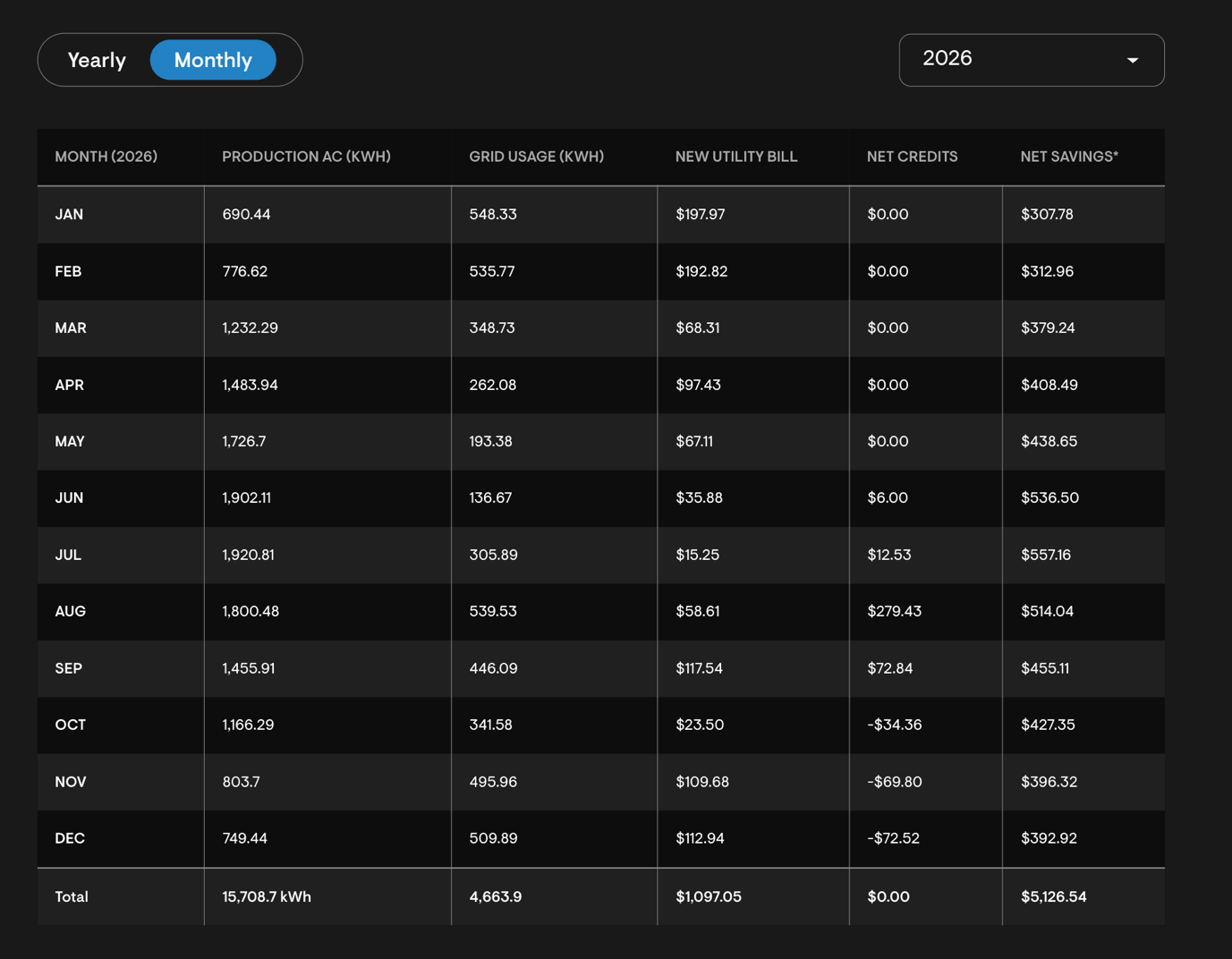
Smart solar billing scheme is prominently available in the Illinois regions. The scheme works like a Net Feed-in Tariff; however, the buyback rate used to monetize/credit the exported electricity is a fraction of a component of the import rate. Smart solar billing dictates that the buyback rate corresponds to the supply component of the buy rate. Delivery/transmission components are not credited to the customer.
On the Solargraf proposal, the detailed savings table will similarly reflect the production, grid usage, and new utility bill as under the Net Feed-in Tariff scheme.